


Variants with greater impact
Analyzes genes associated with hereditary cancers, heart conditions and other conditions relevant to prevention. The panel and its limitations are described in the test's technical details.
 Longevo · by NeoGenomica
Your genetic test, a report to guide prevention and the Longevo app to keep track of your health. All in one journey with NeoGenomica.
Three-layer prevention
Longevo brings together hereditary predisposition analysis, selected risk scores and pharmacogenomics. These results are interpreted alongside your history, tests and habits to support prevention.
Analyzes genes associated with hereditary cancers, heart conditions and other conditions relevant to prevention. The panel and its limitations are described in the test's technical details.
Presents selected genetic scores and, when applicable, estimates integrated with medical history and test results. Calculations depend on available data, age and each model's criteria.
Organizes findings to support discussions about medications, habits and screening strategies with your healthcare team.
Clinical scope
A summary of results, details by health area and next steps to discuss with your doctor. Each section explains what was analyzed, the findings and the limitations of interpretation.

Hereditary predispositions and polygenic cardiovascular risk. Medical history, blood pressure and test results may complement the clinical estimate when available and applicable.

Findings in hereditary predisposition genes and breast cancer risk assessment when applicable. Screening guidance is considered alongside personal and family history.

Relevant findings in other areas of the preventive panel, such as metabolism and neurology, with explanations of their meaning and possible next steps.

Pharmacogenomics to understand how genetic variants may influence responses to medications. Medication choice and dosage require professional assessment.

Markers related to nutrition, exercise and sleep, when available in the report. This complementary information helps put habits and preferences in context.

Results organized by priority, routine prevention recommendations, genes assessed, methodology and limitations. APOE information follows the report's age and disclosure criteria.
Clinical interpretation
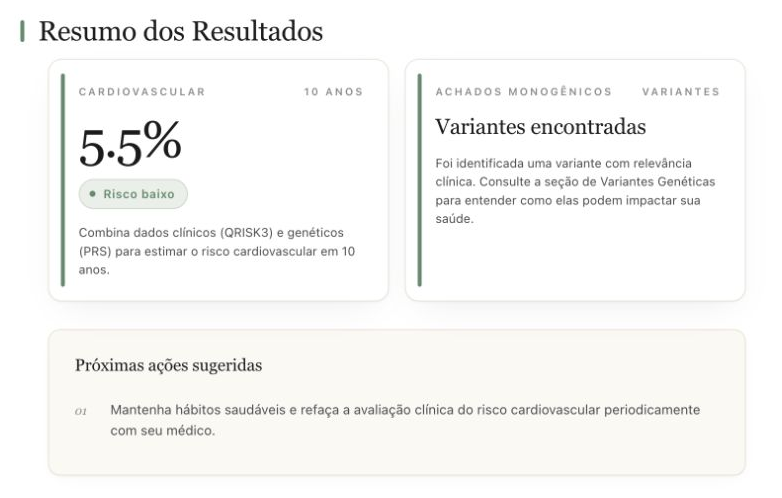
The result organizes the findings by health area and highlights the points that deserve discussion with the doctor.
Real excerpt from the NeoReport demonstration environment, cut without personal data.
Care continues after your report
The Longevo app connects your test results with the information you add over time. A place to view your report, track tests and organize your next steps.
YOUR SPACE FOR CARE
Your health,
in perspective.
Results and next steps
HEALTH AREAS
Care that follows your life
From meals to lab tests, discover tools that help turn information into everyday habits.
Organize goals and meal planning around your preferences, habits and health information. Available genetic findings add context to conversations with your dietitian.

Bring together activity, sleep and circadian rhythm records to observe your habits over time. Data from compatible devices can complement this tracking.

Add lab tests and imaging reports, review biomarkers and compare records. The app helps bring together the history you share with your healthcare team.
Record mood, stress and habits, explore well-being questionnaires and organize actions in My Plan. A way to notice changes and discuss them at appointments.
Explore the pharmacogenomics in your report: how assessed variants may influence medication response. This information helps you prepare for discussions with the professional managing your treatment.
Use the assistant to explore information in your profile and understand the app’s content. It helps you navigate and prepare questions for your healthcare team.
Responses do not replace consultation, diagnosis or prescriptions.

Illustrative demonstrations with no patient data. Features and content depend on the results and data available in your profile.
You can connect compatible services and devices to track activity and sleep, with your permission. Estimates such as biological age depend on additional test results available in your profile; they are not measurements produced by the genetic test.
How it works
You can order on the website or through our team. After the test, you receive access to your report and the Longevo app.
Order Longevo on the website or through NeoGenomica's team. The team guides you through registration, sample collection and shipping.
Follow the team's instructions for the sample type and collection method agreed on when ordering.
After laboratory analysis and review of the results, your report is released with the findings and preventive guidance.
Receive instructions for accessing the app, view your report and use the features to keep track of your health.
The first step is simple
Our team guides you through collection materials, preparation and sample shipping. A buccal swab is the preferred sample for Longevo: it is collected from inside the cheek, following the laboratory’s instructions.
Learn about buccal swab collection
Optional medical follow-up
NeoCheckup maintains the same genetic content as Longevo and adds pre-examination consultation, post-examination consultation and annual clinical reassessment of data for four consecutive years.
Get to know NeoCheckupFrequently asked questions
Yes. When you take the Longevo test, you receive access to your report and the Longevo app, following the team's access instructions. You can view your results and use the app's other features. Access terms are provided when you order.
No. You can access your report and organize your health information without a watch. Activity and sleep synchronization depends on a compatible device or service, the permissions you grant and the available data.
No. Longevo uses whole genome sequencing, with interpretation directed at the scope of the test. This does not mean detecting every variant or predicting every disease. A result without findings does not eliminate future risk.
No. The app organizes information and offers support tools. Estimates, suggestions and assistant responses should be considered by healthcare professionals; they do not replace consultations, diagnosis or prescriptions.
A doctor's order is not required to purchase Longevo. Still, the result should be shared with a professional who knows your history and can contextualize it.
The report includes hereditary predisposition analysis, selected scores, pharmacogenomics and lifestyle and well-being markers. See the scope in the technical details on this page. Results depend on what was actually analyzed and the data available.
The team guides the clinical discussion, eventual confirmation and referral. Tests, habits or medications should not be changed solely based on the genetic report.
The team confirms the sample type, preparation and collection method when you order, according to the samples accepted by the laboratory. You receive instructions for identifying and shipping your sample.
The test is private. NeoGenomica provides documentation for requesting reimbursement when the agreement contract allows.
Test information
Preventive genetic test with a report and access to the Longevo app.
Does not require a doctor's order for purchase. The result must be contextualized with age, history, tests and habits by a health professional.
Predisposition does not equate to diagnosis. Polygenic scores must be interpreted within the limits of the reference population.
Genetics alone does not determine future health. The turnaround period begins after the sample is received and accepted.
Personalized prevention
Order your test, provide your sample and receive your report and access to the Longevo app. Our team guides you through each step.

