Logo NeoGenomica

Oncogenetics

Two strategies for investigating hereditary cancer risk.

NeoPainel and Super Panel evaluate the same set of 106 genes associated with hereditary predisposition to cancer. NeoPainel offers a targeted strategy; the Super Panel, based on the complete genome, expands the classes of variants and modules analyzed.

The indication must consider personal and family history and, when available, genetic counseling.

Grandmother, mother and adult daughter gathered at home
Sequencing and interpretation guided by clinical history.
Content
106 genes in both panels
Sample
Mouth swab or blood
Interpretation
Specialized oncological curation
Post-report
Infinity VUS included

Clinical choice

The same objective, with different levels of amplitude.

NeoPainel focuses analysis on target genes from the exome. The Super Panel uses the complete genome and adds classes of variants and complementary modules.

Exome base

NeoPainel Cancer

106 risk genes

A targeted investigation, with high-quality coverage of the genes analyzed and a balance between scope and deadline.

  • Exomic coverage in target genes
  • CNVs in events of 3 or more exons
  • Specific pipeline for PMS2 and Alu insertion in BRCA2
  • Monitoring Infinity VUS

Complete genome base

Super Panel

106 risk genes

Expands investigation to relevant intronic and regulatory variants, minor CNVs and polygenic risk modules, and oncology pharmacogenomics.

  • CNVs from 1 exon
  • Relevant intronic and regulatory regions
  • PRS for breast cancer risk
  • Oncology pharmacogenomics included
  • Monitoring Infinity VUS

Comparative

NeoPainel or Super Panel?

Both evaluate the same 106 genes related to hereditary predisposition to cancer. The difference lies in the base technology and additional Super Panel modules.

Swipe to compare

Feature NeoPainel Cancer Super Panel
Genes analyzedThe same 106 genesThe same 106 genes
Basic technologyExome with cured oncology panelWhole genome (WGS)
Clinical useTargeted strategy for hereditary researchMaximum sensitivity and greater diagnostic power
CNVsEvents of 3 or more exonsEvents starting from 1 exon
PMS2 and Alu insertion in BRCA2Specific pipelinesSpecific pipelines based on WGS
Intronic regionsFocus on coding regions and splice edgesIncludes relevant intronic and regulatory regions
Infinity VUSIncludedIncluded
PRS and pharmacogenomicsNot includedBreast PRS and oncological pharmacogenomics

Test content

The 106 genes analyzed.

Esta é a lista completa compartilhada pelo NeoPainel Câncer e pelo Super Painel. The gene content is the same; the technology and analytical breadth are different.

Gene symbols in alphabetical order, according to the current technical content of the tests.

AIP ALK APC ATM ATR AXIN2 BAP1 BARD1 BLM BMPR1A BRCA1 BRCA2 BRIP1 BUB1B CDC73 CDH1 CDK4 CDKN1B CDKN2A CEBPA CEP57 CHEK2 CTC1 CTNNA1 CYLD DDB2 DDX41 DICER1 DKC1 EGFR EGLN1 EPCAM EXT1 EXT2 FAN1 FH FLCN GALNT12 GATA2 GPC3 GREM1 HOXB13 HRAS KIF1B KIT LZTR1 MAX MDH2 MEN1 MET MITF MLH1 MLH3 MRE11 MSH2 MSH3 MSH6 MUTYH NBN NF1 NF2 NSD1 NTHL1 PALB2 PDGFRA PHOX2B PMS1 PMS2 POLD1 POLE POT1 PRF1 PRKAR1A PTCH1 PTCH2 PTEN RAD50 RAD51C RAD51D RB1 RET RHBDF2 RNF43 RUNX1 SDHA SDHAF2 SDHB SDHC SDHD SLX4 SMAD4 SMARCA4 SMARCB1 SMARCE1 STK11 SUFU TERC TERT TMEM127 TP53 TSC1 TSC2 VHL WRAP53 WT1 XRCC2

NeoPainel Cancer

Targeted coverage where the question is concentrated.

Recommended when the objective is to investigate hereditary cancer syndromes in depth in the same 106 genes as the Super Panel, without the additional modules of the whole genome-based strategy.

01 · Coverage

Target genes

Technical focus on panel regions, reducing gaps relevant to hereditary predisposition.

02 · Variants

CNVs and small variants

Search for gains and losses involving 3 or more exons, in addition to sequence variants in the genes evaluated.

03 · Complex regions

PMS2 and BRCA2

Specific bioinformatics approach for PMS2 and the Alu insertion in the BRCA2 gene.

Super Panel

Complete genome to expand research.

It brings together monogenic risk, polygenic score and response to medications in a single test, according to the technical scope of each module.

106 risk genes

Expanded oncological analysis

Relevant coding, intronic and regulatory regions, CNVs from 1 exon and specific pipelines.

PRS

Polygenic breast risk

Estimation based on markers and parameters defined by the test.

PGx

Oncological pharmacogenomics

Evaluates responses related to 5-FU, opioids, ondansetron and other covered medications.

Post-report follow-up Infinity VUS

Science evolves. The interpretation of a variant may also evolve.

All NeoGenomica tests include Infinity VUS for variants of uncertain significance that are reported.

Your result monitored over time

A variant of uncertain significance, or VUS, is a finding for which the available evidence does not yet allow us to conclude whether it is related to the disease. Infinity VUS monitors classification updates even after the report is issued.

  1. 01 · Monitor

    Periodically compares reported VUS with new evidence and classifications.

  2. 02 · Review

    A material change is forwarded for expert review before any communication.

  3. 03 · Update

    When the reclassification is confirmed and applicable to the case, the responsible team is notified and the report can be updated.

Understand results and Infinity VUS

Test day

From indication to care plan.

A clinical flow to investigate hereditary predisposition to cancer and support screening decisions.

  1. 01

    Scheduling and preparation

    The team confirms the indication, family data and the necessary material.

  2. 02

    Sample collection

    Mouth swab in a home kit or blood in a laboratory.

  3. 03

    Sequencing and curation

    The genes and modules in the chosen panel undergo specialized analysis and review.

  4. 04

    Report and follow-up

    The result organizes findings, clinical implications and follow-up Infinity VUS.

Clinical interpretation

A report that organizes what matters.

The result presents the main findings, the classification of variants and relevant information for the patient and their family members, as appropriate.

  • Summary of main findings
  • Description and classification of variants
  • Interpretation guided by clinical context
  • Relevant information for family members

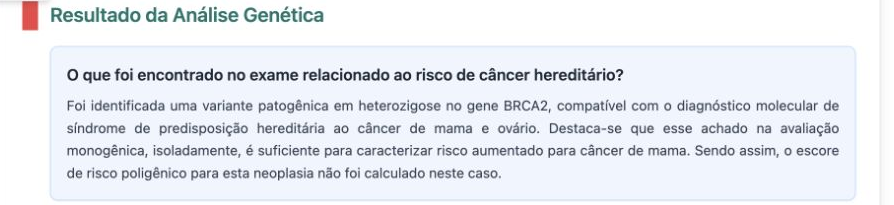
Real excerpt from the NeoReport demonstration environment, cut without personal data.

Anonymized excerpt from a report demonstrating the Super Cancer Panel with genetic results
Demonstrative and anonymized example. The content and length of the report vary depending on the findings of each test.

Frequently asked questions

Before choosing the panel.

What is the main difference between NeoPainel and Super Panel?+

Both investigate the same gene content for hereditary predisposition to cancer. The difference is in the technology: NeoPainel uses an exomic basis in a targeted strategy; the Super Panel uses whole genome to provide greater sensitivity, including minor CNVs, intronic and regulatory regions, breast PRS, and oncology pharmacogenomics.

How do you know which option is suitable?+

The choice considers personal and family history, previous results, the clinical hypothesis and the types of variants that need to be investigated.

What sample is needed?+

sample collection can be carried out using a mouth swab in a home kit or blood, according to team guidance and case requirements.

Does the test require a medical request?+

Yes. The request and clinical data help guide analysis and interpretation of the result.

How does Infinity VUS work?+

The reported variants of uncertain significance remain under monitoring. When a relevant reclassification is confirmed, the requesting physician is notified and the report can be updated.

Expert guidance

Choose the panel by clinical need.

Our team helps evaluate personal and family history and the objectives of the investigation.

Catalog information

Technical data of NeoPainel Cancer

Targeted analysis of genes associated with hereditary predisposition to cancer.

Applications
Hereditary cancer
Accepted samples
peripheral blood, Mouth swab (preferred), DNA extraído
Estimated deadline
30 calendar days, contados após sample acceptance.
FAST · 15 calendar days, contados após sample acceptance.
Base method
Exome with curated oncological panel and specific pipelines for PMS2 and Alu insertion in BRCA2.
Analytical scope
Exomic coverage in target genes, coding regions and splice edges; CNVs in events of three or more exons.
Genes analyzed
106 genes registered in the structured scope of the test.
See full content

AIP, ALK, APC, ATM, ATR, AXIN2, BAP1, BARD1, BLM, BMPR1A, BRCA1, BRCA2, BRIP1, BUB1B, CDC73, CDH1, CDK4, CDKN1B, CDKN2A, CEBPA, CEP57, CHEK2, CTC1, CTNNA1, CYLD, DDB2, DDX41, DICER1, DKC1, EGFR, EGLN1, EPCAM, EXT1, EXT2, FAN1, FH, FLCN, GALNT12, GATA2, GPC3, GREM1, HOXB13, HRAS, KIF1B, KIT, LZTR1, MAX, MDH2, MEN1, MET, MITF, MLH1, MLH3, MRE11, MSH2, MSH3, MSH6, MUTYH, NBN, NF1, NF2, NSD1, NTHL1, PALB2, PDGFRA, PHOX2B, PMS1, PMS2, POLD1, POLE, POT1, PRF1, PRKAR1A, PTCH1, PTCH2, PTEN, RAD50, RAD51C, RAD51D, RB1, RET, RHBDF2, RNF43, RUNX1, SDHA, SDHAF2, SDHB, SDHC, SDHD, SLX4, SMAD4, SMARCA4, SMARCB1, SMARCE1, STK11, SUFU, TERC, TERT, TMEM127, TP53, TSC1, TSC2, VHL, WRAP53, WT1, XRCC2

Medical request
Required

Requirements

Medical request, personal and family history, previous results and clinical data to guide the analysis.

Limitations

Does not include PRS or oncology pharmacogenomics. Intronic and regulatory regions are not its main focus.

Catalog information

Technical data of Cancer Super Panel

Whole-genome-based comprehensive investigation of hereditary predisposition to cancer.

Applications
Hereditary cancer
Accepted samples
peripheral blood, Mouth swab (preferred), DNA extraído
Estimated deadline
30 calendar days, contados após sample acceptance.
FAST · 15 calendar days, contados após sample acceptance.
Base method
Whole genome sequencing (WGS) with curated panel of 106 risk genes.
Analytical scope
CNVs from an exon, relevant intronic and regulatory regions, PRS for breast cancer and oncological pharmacogenomics.
Genes analyzed
106 genes registered in the structured scope of the test.
See full content

AIP, ALK, APC, ATM, ATR, AXIN2, BAP1, BARD1, BLM, BMPR1A, BRCA1, BRCA2, BRIP1, BUB1B, CDC73, CDH1, CDK4, CDKN1B, CDKN2A, CEBPA, CEP57, CHEK2, CTC1, CTNNA1, CYLD, DDB2, DDX41, DICER1, DKC1, EGFR, EGLN1, EPCAM, EXT1, EXT2, FAN1, FH, FLCN, GALNT12, GATA2, GPC3, GREM1, HOXB13, HRAS, KIF1B, KIT, LZTR1, MAX, MDH2, MEN1, MET, MITF, MLH1, MLH3, MRE11, MSH2, MSH3, MSH6, MUTYH, NBN, NF1, NF2, NSD1, NTHL1, PALB2, PDGFRA, PHOX2B, PMS1, PMS2, POLD1, POLE, POT1, PRF1, PRKAR1A, PTCH1, PTCH2, PTEN, RAD50, RAD51C, RAD51D, RB1, RET, RHBDF2, RNF43, RUNX1, SDHA, SDHAF2, SDHB, SDHC, SDHD, SLX4, SMAD4, SMARCA4, SMARCB1, SMARCE1, STK11, SUFU, TERC, TERT, TMEM127, TP53, TSC1, TSC2, VHL, WRAP53, WT1, XRCC2

Medical request
Required

Requirements

Medical request, personal and family history, previous results and clinical data to guide the analysis.

Limitations

The choice must consider clinical hypothesis and types of variants to be investigated; PRS results depend on the reference population and clinical context.