


International guidelines
Integrates relevant genotypes into higher level CPIC, DPWG and PharmGKB evidence recommendations.
Pharmacogenomics in neurology and psychiatry
Pharmacogenomics can support decisions in different areas of medicine. NeoFarma Neurologia has a specific focus on medications used in neurology and psychiatry, always integrated into the clinical context.
The result supports the professional decision and must be interpreted in conjunction with the patient's clinical picture, medications in use and other factors.

What the test adds
The report brings together the pharmacogenomic profile and available evidence to support medication selection, dose adjustment and monitoring.
Integrates relevant genotypes into higher level CPIC, DPWG and PharmGKB evidence recommendations.
Evaluates metabolizing enzymes, transporters and targets associated with neurology and psychiatry drugs.
The team supports professionals and institutions in interpreting and incorporating findings into the therapeutic plan.
When to consider
The indication must consider therapeutic history, response, adverse events, interactions and clinical objectives.
01
Depressive or anxiety disorders with cycles of trial and error.
02
ADHD, ASD, epilepsy or combinations with incomplete response.
03
Use of antipsychotics, VMAT-2 modulators, anticonvulsants or opioids.
04
Elderly people, sensitive populations and hospital programs that require greater attention to interactions.
Clinical scope
The selection of genes and drugs follows the technical scope of the examination and the main clinical pharmacogenomics guidelines.
Swipe to consult
| Class | Subcategory | Examples of pharmaceuticals | Core genes |
|---|---|---|---|
| Antidepressants | SSRI and SNRI | Sertraline, escitalopram, citalopram, venlafaxine, vortioxetine | CYP2C19, CYP2D6, CYP2B6 |
| Antidepressants | Tricyclics | Amitriptyline, nortriptyline, clomipramine, imipramine, desipramine | CYP2D6, CYP2C19 |
| Antipsychotics | First and second generation | Aripiprazole, risperidone, haloperidol, ziprasidone, quetiapine, pimozide | CYP2D6, CYP3A4 |
| Motion control | Anticonvulsants and VMAT-2 | Phenytoin, tetrabenazine, deutetrabenazine | CYP2C9, CYP2D6 |
| Analgesia and pain | Opioids and adjuvants | Codeine, tramadol, hydrocodone, oxycodone | CYP2D6, CYP2C9 |
| Specific modulators | Benzodiazepines and ADHD | Diazepam, clobazam, atomoxetine and adjuvants | CYP2C19, CYP2D6 |
Informed choice
NeoFarma Neurologia combines genetic data with guidelines, curation and support so that the result is incorporated into routine care.
Swipe to compare
| Appearance | NeoFarma Neurologia | Basic test | No pharmacogenomics |
|---|---|---|---|
| Genes | CYPs, transporters and relevant targets | Reduced panel of CYPs | Not evaluated |
| Guidelines | CPIC, DPWG and PharmGKB | Selected references | Not applicable |
| Recommendation | Dose, alternative, monitoring and interactions | Scope-limited guidance | Clinical fit without genetic data |
| Update | Review when new evidence changes the recommendation | No scheduled reevaluation | Not applicable |
Update NeoFarma Neurologia
CPIC and DPWG guidelines, regulatory information and relevant publications are monitored. Changes that impact the recommendation undergo clinical review before an update.

Assisted flow
A process designed to integrate pharmacogenomics into clinical routine.
The team confirms the indication, therapeutic history and medications in use.
The mouth swab kit comes with a medication checklist and instructions.
Pharmacogenomic genes undergo technical analysis and clinical review.
The report brings together dose, alternatives and monitoring alerts.
The team supports the incorporation of findings into the therapeutic plan.
Clinical deliverable
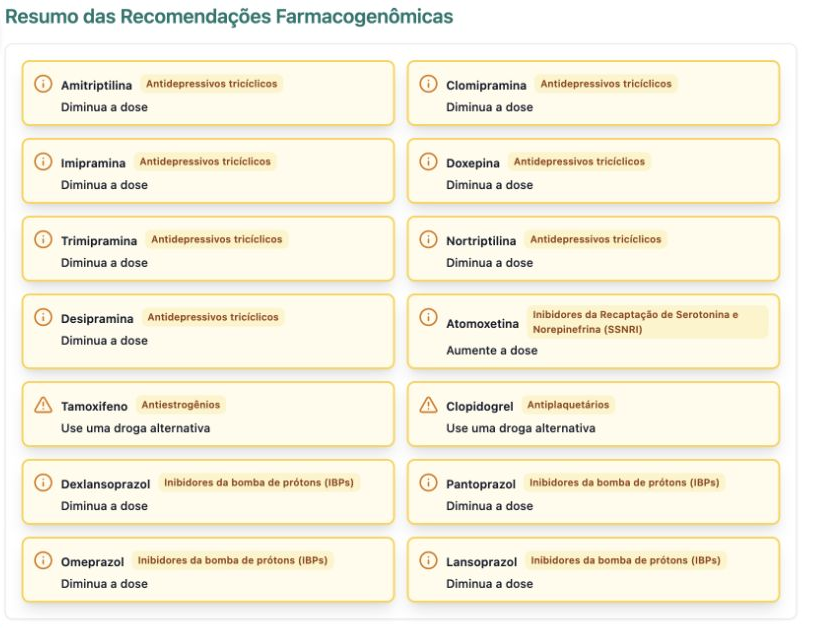
The executive summary highlights the medicines with pharmacogenomic recommendations and presents the suggested procedures in accordance with the applicable guidelines.
Real excerpt from the NeoReport demonstration environment, cut without personal data.
Frequently asked questions
It adds information about how genetic variants can influence metabolism, response or risk of adverse events. This information is integrated into the clinical assessment.
The scope includes antidepressants, antipsychotics, anticonvulsants, VMAT-2 modulators, opioids, benzodiazepines and atomoxetine, among other drugs defined by the test.
It can be useful in the face of partial response, adverse events, polypharmacy or the need to structure pharmacogenomic protocols, always in accordance with professional assessment.
No. DNA is obtained by mouth swab. The medications in use must be informed to contextualize the interpretation, without changing the treatment without medical guidance.
10 calendar days, after receipt of complete documentation .
DNA does not change. When new evidence impacts the recommendation, the result can be reassessed without a new sample collection, according to the service's criteria.
Clinical integration
Talk to the team about cases, institutional protocols and demonstrative reports.
Test information
Pharmacogenomics applied to neurology and psychiatry medicines.
Clinical request, therapeutic history, list of medications in use, sample and necessary information.
The result is an additional layer of information and does not replace clinical decision-making. Treatment should not be changed without medical advice.
It is not necessary to suspend medications for sample collection. DNA does not change, but recommendations can be reevaluated in light of new evidence.

