


What can explain the picture?
The team brings together signs, evolution, tests and family history to describe the clinical question that will guide the analysis.
At a sensitive time, hospital staff may consider a comprehensive DNA analysis as a priority stream when a genetic condition is suspected. NeoGenoma UTI seeks information that can help understand the situation and support the next steps in care.
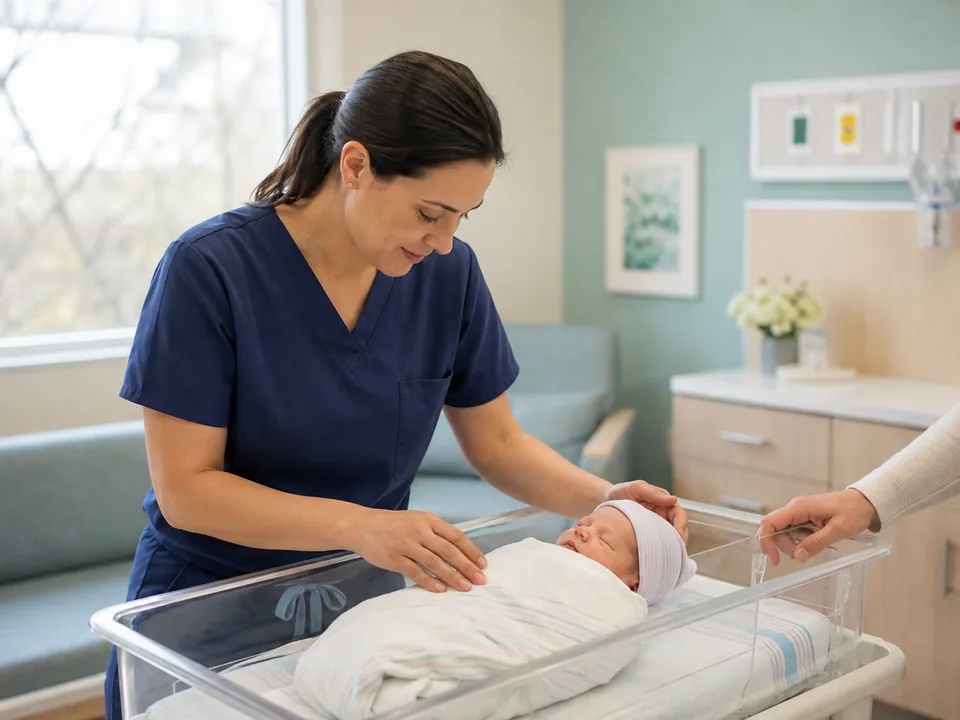
The family participates in the choices with the team that knows the situation and monitors the child.
When it can help
The genome can be discussed when many causes are possible and an answer has the potential to support care. The indication is individual and no test guarantees diagnosis.
The team brings together signs, evolution, tests and family history to describe the clinical question that will guide the analysis.
The genome investigates different regions and classes of variants within the validated capabilities of the test, without detecting all possible changes.
If there is a relevant finding, it is related to clinical information and may require confirmation or further evaluation.
Coordinated care
Genomic analysis is part of a larger investigation and does not replace stabilization, treatment, imaging tests, laboratory tests or other measures defined by the team.
Evaluates the indication, gathers clinical information, maintains intensive care and interprets any findings in the patient's context.
Coordinates authorizations, documentation, sample collection, identification and transportation according to its flow and laboratory guidelines.
Receives explanations, asks questions and participates in consent according to applicable rules and the clinical situation.
Checks the sample and information, performs the contracted test and communicates the result through channels defined with the team.
Stages of the process
The actual flow depends on the hospital, clinical condition, available samples and the test defined by the team.
The team explains why they consider the genome, what it can look for, its limits and how a result could be used.
The person responsible receives information about analysis, possible results, data, additional findings when applicable and participation of family members.
The hospital identifies and collects the indicated sample. Samples from parents or other family members may be requested when they help with interpretation.
The genome data is evaluated together with the manifestations reported by the team and the test quality controls.
The assistant team relates the report to the clinical evolution and talks to the family about meaning, limits and next steps.
Consent and samples
Even in a highly complex environment, the team must explain the purpose of the test, the use of the samples and the possible results as clearly as the situation allows.
The type of sample is defined by hospital flow and test requirements. The team explains the sample collection and any need for a new sample.
Comparing samples can help understand whether a change was inherited or appeared for the first time in the child. Each family member receives information and separately authorizes the use of their own sample and data.
The consent must explain what the test looks at, the choices available, and the policy for findings outside the main question, when applicable.
Ask who will have access, for what purposes the information will be used, and what rules apply to keeping samples and data.
Possible results
All results have limits. The assistant team assesses whether the finding matches the picture and whether it can support a decision.
An alteration classified as pathogenic (disease-causing) or probably pathogenic can support a diagnosis when it matches the signs and the form of inheritance.
This does not exclude a genetic cause. Technical limits, changes that the test does not assess or insufficient knowledge may prevent an answer.
A variant of uncertain significance does not confirm diagnosis and should not guide treatment, surgery, prognosis, surveillance or predictive testing.
Infinity VUS: All NeoGenomica tests include monitoring of reported VUS. This follow-up does not transform VUS into a diagnosis; Any reclassification needs to be communicated and reinterpreted in the clinical context.
Important limits
Available technology and knowledge do not address or interpret all possible causes of illness.
Some areas of DNA have insufficient coverage or quality and may require another method.
Certain DNA repetitions, chemical changes, changes present in a few cells or complex reorganizations may be beyond the scope of the examination.
A variant may not yet have sufficient evidence, and the relationship between genes and diseases continues to evolve.
The team makes support, investigation and treatment decisions based on the clinical picture and available evidence, without depending on a genetic response.
What the guidelines say
This does not mean that every child needs these tests. The team considers signs, urgency, tests already performed, and other methods that may be necessary.
The NSGC, in a guideline endorsed by the AES, recommends offering genetic testing to people of any age. Exome, genome or a broad panel can be used in the first step.
02 · ACMGThe ACMG recommends considering the exome or genome in the first or second stage of pediatric investigation of these conditions.
03 · IPCHiPA consensus of experts from IPCHiP member centers recommends rapid exome or genome as an initial option for babies in the neonatal ICU with hypotonia without an clarified cause.
04 · AAPThe AAP recommends exome or genome in the first step in most circumstances. Other tests can also be part of the initial assessment.
How to interpret: “first line” or “first stage” describes when a test can enter the diagnostic strategy; does not guarantee diagnosis or replace clinical evaluation, genetic counseling or targeted tests indicated for the case. Each item opens the original publication.
Questions for the team
Yes, in some situations. Guidelines include exome or genome among the initial options for certain pediatric conditions, such as global developmental delay, intellectual disability, some congenital anomalies, epilepsy without an identified cause, and unexplained neonatal hypotonia. This does not mean that every child needs to have a genome done; the choice depends on clinical assessment. See recommendations and sources.
Ask the team to explain the genetic suspicion, which alternatives have already been evaluated, and how a response could support care.
Not always. Comparison can improve interpretation in some cases, but depends on strategy and availability. Each person separately authorizes their participation.
Yes. An unexplained result does not exclude genetic origin and may lead to other evaluations depending on clinical evolution.
No. Some findings can support decisions, others clarify diagnosis or advice, and some do not change immediate care. A VUS should not guide conduct.
The return is coordinated by the assistant team according to the hospital flow, with the participation of genetics professionals when available or indicated.
No. Genomic investigation takes place alongside treatment and other assessments defined for the child.
Next step
The hospital team can clarify why the test was proposed and how the flow will be conducted. NeoGenomica can guide the hospital on access to NeoGenoma UTI.
For patients and families
Start with the topic that comes closest to your question.

